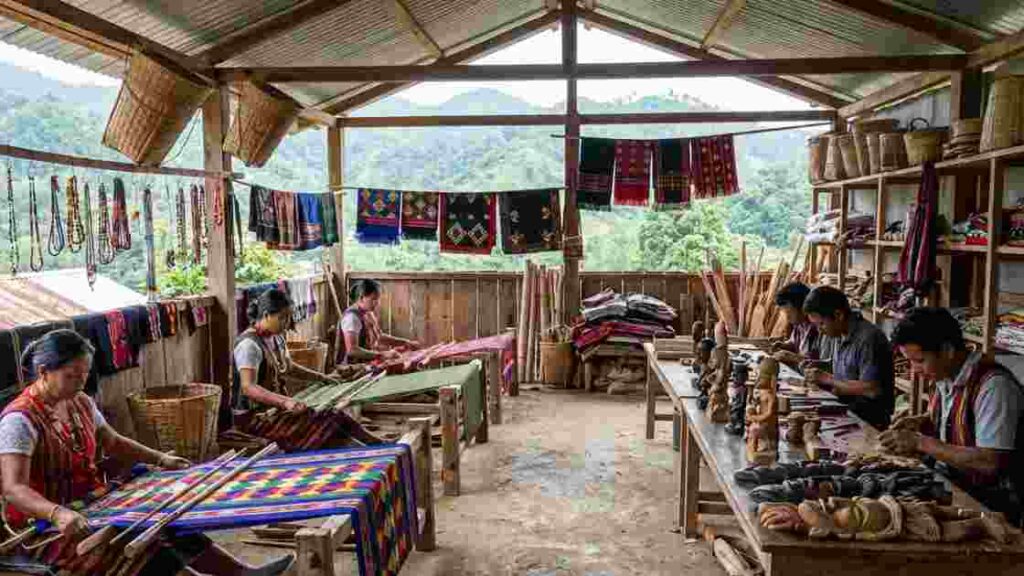
Nagaland is a very vibrant state in the North-Eastern part of India, and it is a land where age-old traditions are an integral part of everyday life. The different tribes that inhabit this land have their own languages, stories, clothing, and artwork. Handicrafts from Nagaland beautifully reflect this diversity, showcasing the creativity and identity of each tribe. The handmade crafts of the different tribes are full of meaning, patience, and wisdom that has been accumulated over the years.
In a world that is quickly moving towards mass production, the handicrafts of Naga have a soulful, sustainable, and personal feel to them. Every piece of handicraft has a story to tell, whether it is about warriors and weavers, forests and festivals, or ancestors and identity. If you are someone who appreciates art with meaning and history, then these handicrafts are worth checking out.
In this blog post, we will introduce you to 7 unique handicrafts from Nagaland that you should know about. If you are a craft enthusiast, someone who is interested in learning more about culture, or someone who appreciates the authenticity of handmade crafts, this post will give you a clear insight into Naga handicrafts.
1. Naga Shawls – Woven Stories of Identity
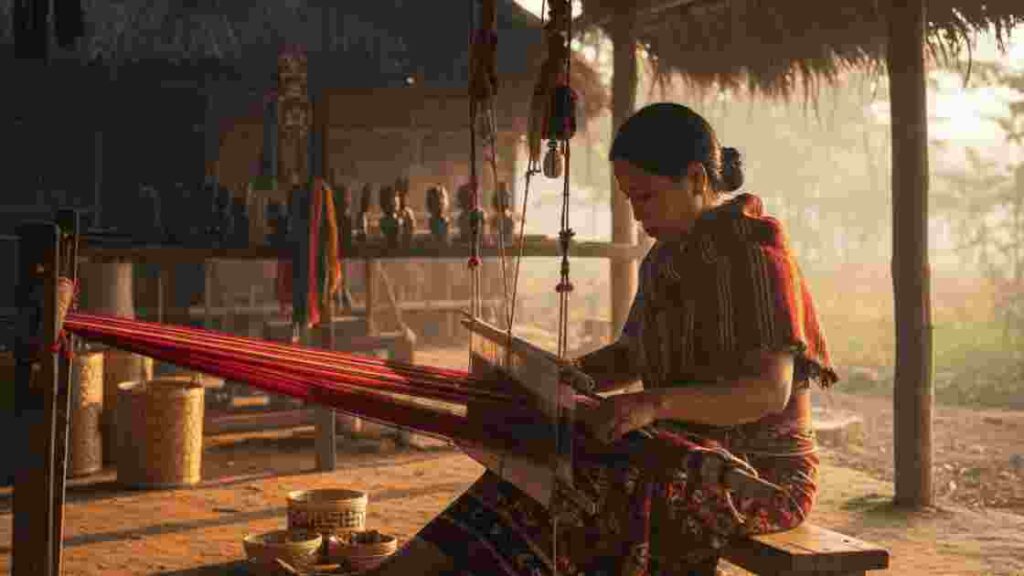
Naga shawls are more than just garments. They are full of stories of tribal identity, status, and tradition. Every tribe in Nagaland, such as Ao, Angami, Sumi, Lotha, Konyak, and so on, has its own distinctive designs and combinations of colors for the shawls
Conventionally, these shawls are woven by women on handlooms. They typically have bold geometric designs, animal motifs, and symbolic colors such as red for bravery, black for strength, and white for purity. Traditionally, some of these shawls were reserved for warriors or persons of high status.
The Naga shawls are now appreciated globally for their beauty and warmth. They can be worn in traditional styles or with contemporary clothes, and they remain eternal pieces of wearable heritage.
2. Bamboo and Cane Crafts – Sustainable Art from Nature
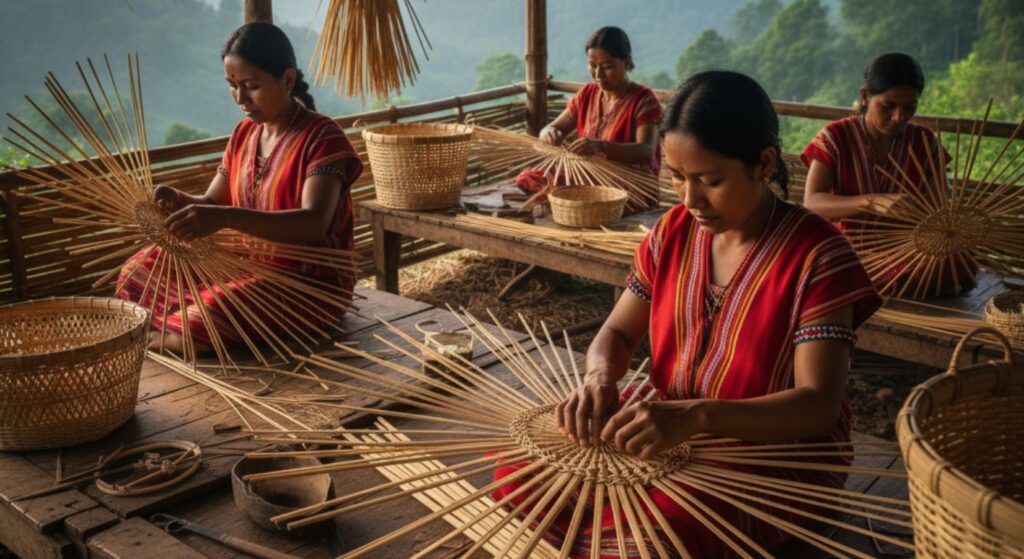
Bamboo and cane are very essential in the daily life of the people of Nagaland, and the craftsmanship in these products is remarkable. Skilled artisans have turned bamboo and cane into baskets, mats, trays, furniture, and other useful things.
What is special about these handicrafts from nagaland s is that they are eco-friendly. Sustainability is an important aspect all over the world. Bamboo craft items from Nagaland are a good fit for a sustainable lifestyle. They are lightweight, strong, and biodegradable, and they also look good.
Bamboo and cane crafts, ranging from storage baskets for the home to decorative accessories for the modern home, are a perfect blend of functionality and tradition.
3. Naga Tribal Jewelry – Bold, Raw, and Symbolic
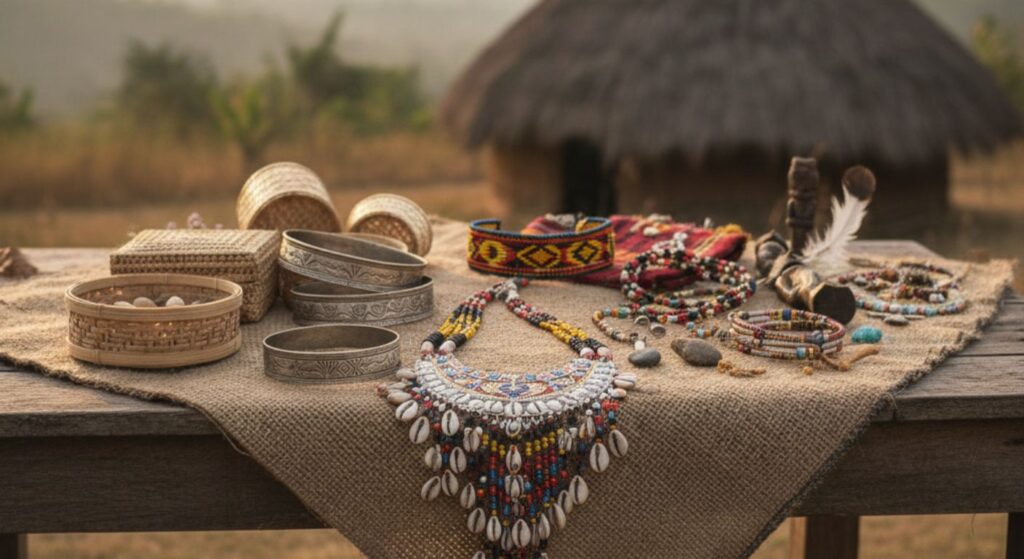
Naga jewelry is very natural, strong, and colorful. It is made of beads, shells, animal bones, feathers, seeds, and metals. These were worn by people during celebrations, rituals, and ceremonies.
Each one has significance, whether it is an expression of strength, fertility, prosperity, or tribal affiliation. Some common forms of beaded jewelry include necklaces, headbands, armbands, and earrings.
In recent years, the Naga tribal jewelry has gained popularity with fashion designers and collectors because of its simple design and strong symbolism. When you wear one, you’re not just adding an accessory—you’re carrying a story.
4. Wood Carvings – Art Inspired by Nature and Belief
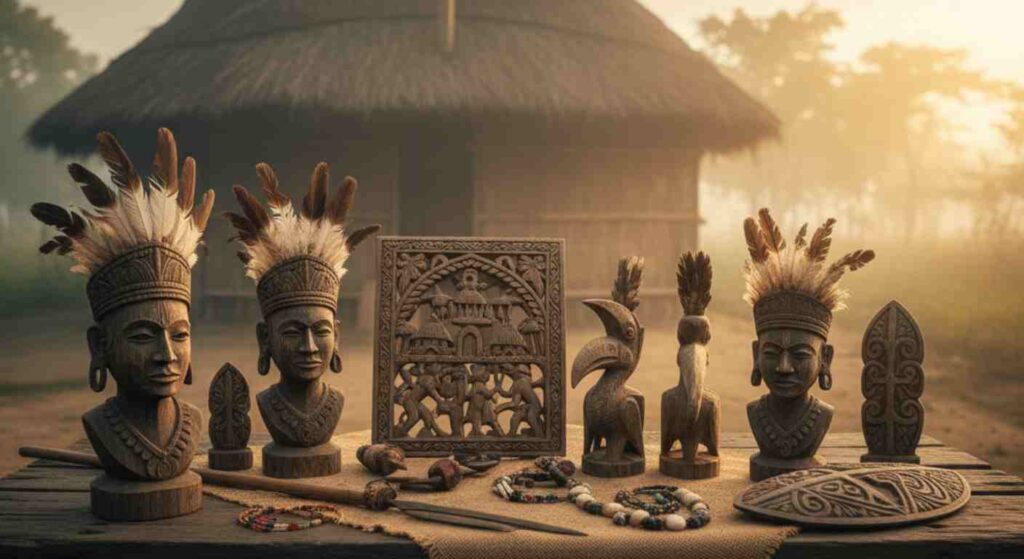
Wood carving is a specific handicrafts from Nagaland that gets its roots based on its animist origins and its affinity towards nature. Locals craft masks, statues, tools, etc. out of the wood that is locally available.
These wood artworks traditionally decorated ceremonies, gates of villages, and homes with aims of keeping evil at bay or as a form of honoring ancestors. The designs incorporate different elements like animal and human depictions with symbolic representation of strength and spirituality.
Currently, these wood carvings are appreciated as unique decorations that bring an ethnic and rural touch to modern environments.
5. Pottery – Earthy Expressions of Everyday Life
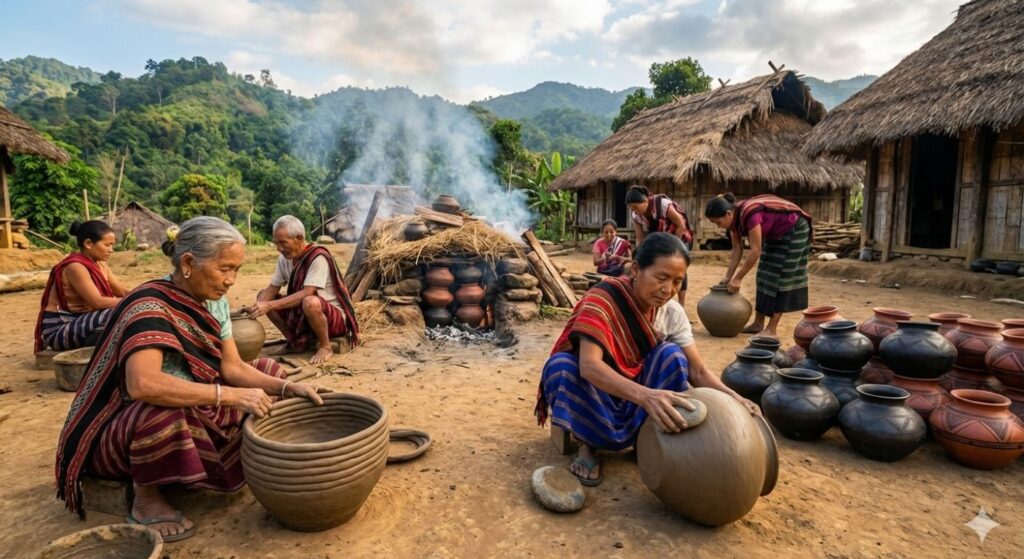
Naga pottery is all about functionality and simplicity. It is created by women, and the pots are made by hand without the use of a wheel, so each one is unique.
They are used for cooking, storing water, and for rituals, which indicates a close association with the earth. The natural materials, soft colors, and natural shapes are attractive to those who prefer minimalist and rustic designs.
With people appreciating more and more the value of handmade products and the beauty of imperfection, Naga pottery is slowly being recognized outside the local markets.
6. Naga Textiles and Embroidered Fabrics
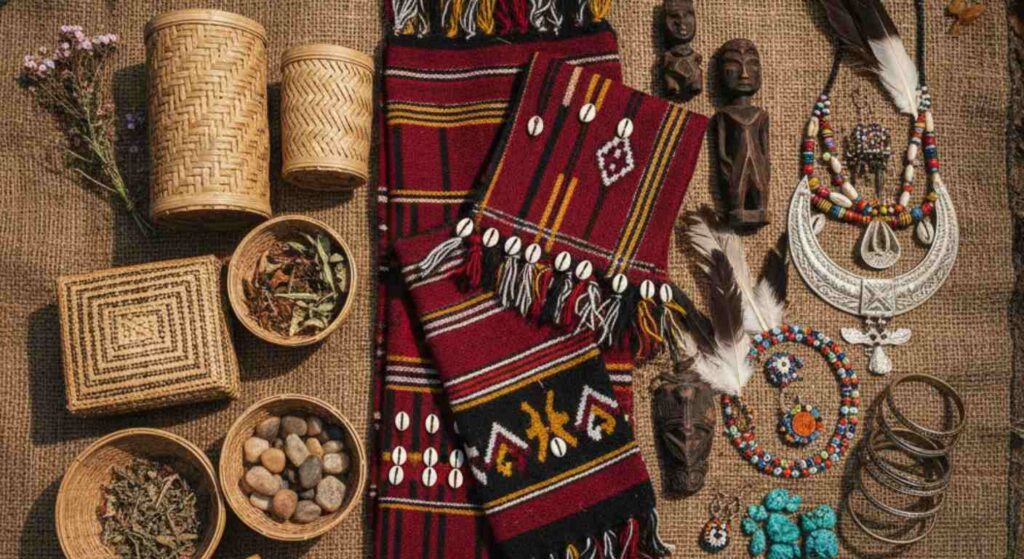
In addition to shawls, Nagaland is famous for its diverse textile patterns, such as handwoven fabrics and embroidered cloth. These fabrics are used to make traditional clothes, bags, wall hangings, and home décor.
The designs may include tribal myths, nature, and everyday life. The use of natural dyes and hand-spun yarns increases the authenticity and sustainability of the designs.
In modern days, the Naga textiles are being given a new life in the form of modern products while retaining their cultural essence, making them ideal for those who like tradition with a modern touch.
7. Traditional Naga Weapons and Metal Crafts
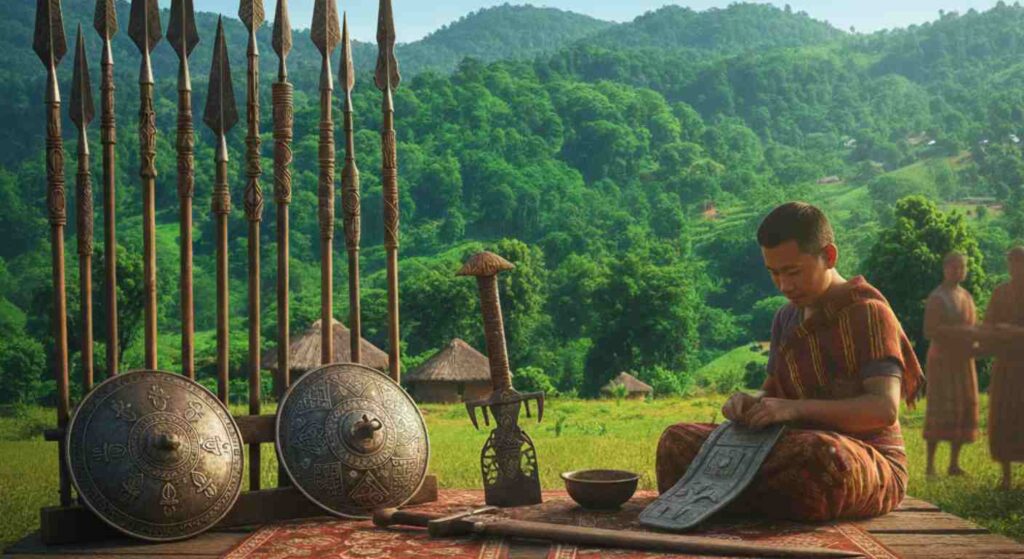
Traditional items used as weapons, such as spears, daos (machetes), and shields, have been an important part of Naga tribal tradition. Originally used as tools in hunting and as protection, these items have now become mainly decorative pieces.
These were created from metal and wood and signify the warrior soul of the Naga tribes, often displayed during festivals or as part of cultural display. The craftsmanship of this object also speaks of accuracy, potency, and elegance.
For both collectors and history buffs, these items hold significant cultural and historical value.
Why Handicrafts from Nagaland Matter Today
Buying handicrafts from Nagaland is more than just having a beautiful piece of art in your possession. It is a way of sustaining culture and giving artisans a chance to earn a fair living.
In today’s world of fast fashion and mass-produced goods, the decision to buy handmade crafts is a deliberate move towards ethical consumerism.
Final Thoughts
The handicrafts from Nagaland are a celebration of identity, resilience, and creativity. They embody the essence of the hills, the beat of the looms, and the stories of the tribes who have maintained their heritage despite all odds.
If you are interested in finding genuine, handmade pieces of art from North-East India and other parts of the world, this is the right time to explore.
If you enjoyed learning about these special handicrafts and are interested in learning more, be sure to follow our Instragram www.instagram.com/estorenortheast/ and visit www.estorene.com. This will not only help you learn more about these handicrafts but will also ensure that they continue to thrive.
Let’s celebrate handmade. Let’s celebrate heritage.
FAQs
1. What are the most famous handicrafts of Nagaland?
Some of the most popular handicrafts from Nagaland are the traditional Naga shawls, bamboo and cane crafts, and tribal jewelry. Wood carving and handmade pottery are also common among various Naga tribes. These handicrafts are produced using natural materials. These are a reflection of the culture, lifestyle, and artistic heritage of Nagaland.
2. Why are Naga shawls unique?
The uniqueness of the Naga shawls is that every shawl is a representation of a particular tribe of Nagaland. The colors and designs represent identity, courage, and status. In the past, only warriors or respected persons were allowed to wear certain types of shawls.Today, the Naga shawl is sought after all over the world for its cultural significance and craftsmanship.